

Offering Sacrifices of Animals, Deities and Holy Martyrs — Intentions
The book entitled The Golden Bough: A Study in Magic and Religion — author: James Frazer describes precisely, over 1,000 pages, the consequences of idolatry. The karmic consequences of breaking Commandment No. II of the Decalogue. Exodus 20:2–17
“4 You shall not make for yourself a carved image or any likeness of anything that is in heaven above, or on the earth beneath, or of those things that are in the waters under the earth. 5 You shall not bow down to them or serve them.”
The karmic consequences are usually spread over time across the subsequent incarnations of the Soul of someone who broke the divine proposal, as the Jews call the Decalogue. One pays separately for personally being a deity-god, and differently for worshipping “gods”, deifying other people and equating them with God. In “The Golden Bough”, page after page, we find descriptions of the rituals of execution to which gods throughout the entire Earth were and are subjected. The author collected authentic descriptions from ancient civilizations, as well as ones almost contemporary with him. I publish below several examples connected with sacrificing a ram and human beings. One must also take into account the subsequent incarnation of the Soul of the Deity in the body of a person with Down syndrome or an idiot. For this is how God shows His opinion of those who push themselves onto altars. The parents of the idiot are usually those who contributed to the deification of a given individual or were the most zealous promoters of any human being called a Living god. The opinion is expressed through the idea: “Now see what you have truly created”
…Every year, the Leucadians selected one criminal whom, as a scapegoat, they cast into the sea from the “Lover’s Leap”, a white rock situated at the southern end of the island. However, in order to alleviate his fate, living birds and feathers were attached to him, while a flotilla of small boats waited at sea to pull him out and carry him beyond the borders of the country. Such humane precautions were probably a modification of the former custom of drowning the victim. The Leucadian rite was performed while a sacrifice was being offered to Apollo, who had a temple or sanctuary at that place. In other regions, there was an annual custom of throwing a young man into the sea with the prayer: “Be our outcast”; this freed the people from the misfortunes that had befallen them or, according to another explanation, delivered them by repaying a debt they had incurred with the god of the sea. Among the Greeks living in Asia Minor in the sixth century before our era, the custom of sacrificing a scapegoat took the following forms: When an epidemic, famine or another misfortune befell a city, an ugly or disabled man was selected to take upon himself all the afflictions of the community. After being led to the appointed place, he was given dried figs, a loaf of barley bread and cheese. He ate all of it, after which he was struck seven times on the genitals with squills and branches of wild fig trees and other wild-growing trees, while flutes played a certain traditional melody throughout. He was then burned upon a pyre built from forest trees, and the ashes were cast into the sea. A similar custom was probably observed by the Asiatic Greeks during the harvest festival of the Thargelia. In the ritual described above, beating the victim with squills and branches of wild fig trees could not have been intended to increase his suffering, because in that case an ordinary stick would have been sufficient. The true meaning of this part of the ceremony was explained by W. Mannhardt. He points out that the ancients attributed to the squill magical properties capable of warding off evil spells, and therefore hung it on the doors of houses and used it in purification rites. From this comes the Arcadian custom of beating the image of Pan with a squill during his festival and also whenever hunters returned empty-handed. This was probably not a punishment inflicted upon the god, but an attempt to free him from evil spirits that prevented him from fulfilling his divine functions, namely providing the hunters with game. Similarly, beating a human victim on the genitals with squills was intended to free his reproductive powers from all restraints or spells that might have been cast by demons or other malicious spirits. And since the Thargelia, during which a human being was sacrificed, was an early harvest festival celebrated in May, we recognize in him the embodiment of the creative and fertile god of vegetation…
*************
…..The Thebans and all other Egyptians who worshipped the Theban god Ammon regarded the ram as a sacred animal and did not sacrifice it. But once a year, during the festival of Ammon, they killed a ram, removed its skin and clothed the image of the god in it, after which they mourned the ram and placed it in a sacred tomb. This custom is explained by a legend stating that Zeus once appeared to Hercules clothed in a fleece and with the head of a ram. Obviously, in this case the ram is simply the animal god of Thebes, just as the wolf was the animal god of Lycopolis and the goat the animal god of Mendes. In other words, this ram was Ammon himself. It is true that on monuments we see Ammon in a semi-human form, with the body of a man and the head of a ram. This proves only that he was at the transitional stage through which animal gods regularly pass before appearing as fully anthropomorphic gods. The ram was therefore not killed as a sacrifice offered to Ammon, but as the god himself, and the custom of clothing his image in the skin of the slaughtered animal shows that he was identical with the animal. Such an annual killing of the ram-god may be explained by the causes which I attributed to the general custom of killing the god, as well as to the particular Californian customs of killing the divine buzzard…..
To supplement the information contained here, I recommend reading the article entitled Link “Bullfighting — the Karma of a Living God. Burdens of the Soul.” In it, I brought together three seemingly different patterns of death:
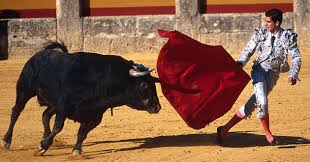
–a bull killed in a bullfight
–a deity named Meriah, killed in India until recently
–holy martyrs killed in order to spread their cult
Below, I publish intentions written jointly with Sławomir Zgłobicki which may bring an understanding of what offering sacrifices is.
- our worshipping worshipping, spreading spreading, promoting promoting, professing professing cults of all kinds, ranks, genders, races, colours and significance, including animals, people, plants, flowers, extraterrestrials and microorganisms, including totemic ones and not only, by sparing sparing them, respecting respecting their lives and respectively killing killing and eating eating them and not only, as well as our own and other people’s experiencing experiencing the consequences of this /+ the opposite pattern separately
- our killing killing, offering offering as sacrifices all kinds, ranks, genders, races, colours and significance of animals, people, plants, flowers, extraterrestrials and microorganisms, such as, including, a ram, rooster, lamb, sacrificial goat, sacrificial human being and not only, as sacrifices, including when laying laying and pouring pouring the foundations of a house, on birthdays, at baptisms, for First Communion, at funerals, weddings, circumcision and not only, intended intended to give power and permanence to the construction and to the particular rite of passage, as well as for all other reasons, and our own and other people’s experiencing the consequences of this /+ the opposite pattern separately
- our being killed and offered as sacrifices as animals of all kinds, ranks, genders, races, colours and significance, such as, including, a ram, rooster, lamb, human being, deity, goddess, god and not only, as sacrifices, including when laying and pouring the foundations of a house, on birthdays, at baptisms, for First Communion, at funerals, weddings, circumcision and not only, intended to give power and permanence to the construction and respectively to the particular rite of passage, as well as for all other reasons, and our own and other people’s experiencing the consequences of this /+ the opposite pattern separately
- our killing and offering as sacrifices animals, people, plants, flowers, extraterrestrials and microorganisms of all kinds, ranks, genders, races, colours and significance, such as, including, a ram, rooster, lamb and not only, as sacrifices, including on the occasion of all kinds of religious and state holidays, ceremonies, rites, rituals and not only, for, including, gods, deities, God the Giver of Life, rulers and messiahs of all kinds, ranks, genders, races, colours and significance, also for prosperity, happiness and not only; in a manner causing suffering and pain to the dying being and respectively in a “gentle” manner intended to inflict as little pain and suffering as possible, including by cutting the throat, disembowelling alive, striking the heart and not only, so that the victims suffer little or greatly, as well as our own and other people’s experiencing the consequences of this /+ the opposite pattern separately
- our being killed and offered as sacrifices as animals of all kinds, ranks, genders, races, colours and significance, such as, including, a ram, rooster, lamb and not only, as sacrifices, including on the occasion of all kinds of religious and state holidays, ceremonies, rites, rituals and not only, for, including, gods, deities, God the Giver of Life, rulers and messiahs of all kinds, ranks, genders, races, colours and significance, also for prosperity, happiness and not only; in a manner causing suffering and pain to the dying being and respectively in a “gentle” manner intended to inflict as little pain and suffering as possible, including by cutting the throat, disembowelling alive, striking the heart and not only, so that the victims suffer little or greatly, as well as our own and other people’s experiencing the consequences of this /+ the opposite pattern separately
- our participating in, including, festivals, celebrations, ceremonies, rites, rituals and not only, during which animals, people, plants, flowers, extraterrestrials and microorganisms of all kinds, ranks, genders, races, colours and significance, including a ram, rooster, lamb and not only, are killed and offered as sacrifices, including to gods, deities, God the Giver of Life and not only, of all kinds, ranks, genders, races, colours and significance, as well as our own and other people’s experiencing the consequences of this /+ the opposite pattern separately
- our killing and offering as sacrifices animals, people, plants, flowers, extraterrestrials and microorganisms of all kinds, ranks, genders, races, colours and significance by deliberately failing to strike the heart, head or neck, causing the being offered as a sacrifice to struggle, bleed out and die for a long time, and not only, as well as our own and other people’s experiencing the consequences of this
- our killing and offering as sacrifices animals, people, plants, flowers, extraterrestrials and microorganisms of all kinds, ranks, genders, races, colours and significance by killing them with clubs, hoes, pitchforks and machetes, honourably and dishonourably, including for ourselves, for our family, for God and deities, for messiahs, also in order to find professional fulfilment and media fulfilment and not only, as well as our own and other people’s experiencing the consequences of this /+ the opposite pattern separately
- our killing and offering as sacrifices animals, people, plants, flowers, extraterrestrials and microorganisms of all kinds, ranks, genders, races, colours and significance by killing them after removing the skin and before removing the skin, after preliminary torment, killing them in stages, frightening and calming them before killing them, including with knives and sharp objects, pistols and rifles, verbally, threatening them with death and not only, as well as our own and other people’s experiencing the consequences of this /+ the opposite pattern separately
- our being bound by the legs, hands, limbs and neck before being offered as sacrifices /+ the opposite pattern separately
- our reluctance to offer God and our fellow human beings the pure love of our hearts and Souls, our righteous and noble thoughts, aspirations and deeds, instead of sacrifices of ourselves, divine sons, divine mothers, deities, divine messengers, animals, plants, various naive and mentally incapable beings and not only them, as well as our own and other people’s experiencing the consequences of this /+ the opposite pattern separately
Technical matters concerning the idea and the construction of sentences when working with intentions
Article “800 Intentions to Be Cleansed” Link
“Constructing Extensive Intentions and Prayers. A Skype Conversation About the Technique” Link
“One-Sentence Pattern for Working with Intentions” Link
The word (–not) added to a particular word when working with intentions means that it is worth mentioning it as an opposite, or even independently finding and speaking aloud, during the work itself, any synonyms that come to mind together with their opposites
For example — being poor people, sick people
it is also good to say it together with its opposite
–being poor people, sick people, –not being poor people, sick people
This makes it possible to immediately activate a given pattern as broadly as possible in different aspects, including its opposite. It is also worth knowing that Souls often think and claim that they do not have such opposite patterns, for example that they are not idolaters, as in a given case or word
Another example:
A woman’s Soul denies having once been a bad mother. Therefore, adding the negating phrase –not being a bad mother may allow her to understand the state in which she finds herself
Being a bad mother, –not being a bad mother–
“But of course not, never in my life! These are not my patterns. What I do is my private matter.” [This is what a soul very often says or thinks about itself]
This post has 1 comment
- image s_majda says: 12/04/2017
at 23:13 (Edit) Hundreds of zealous Byzantine peasants gathered around ageing saints who were dying, waiting for the moment when they could cut them into pieces once they fell from their perch — quite literally in the case of stylites. Theodoret recorded one such incident when word spread that the famous hermit James of Cyrrhus was dying. Theodoret had to use all his authority to persuade the crowd of relic hunters armed with sickles to disperse. Excerpt from page 202 of the book entitled “From the Holy Mountain”
Opublikowano: 23/08/2026
Autor: Sławomir Majda
Kateogrie: Religions, priests, sects, idolatry, vows.
Komentarze