

Trimurti – Intentions for Prayer Work
An article on a similar subject concerning the Holy Trinity: Link
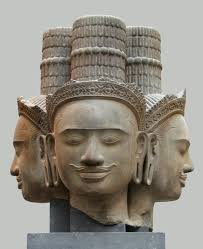
Trimurti (Devanagari: त्रिमूर्ति, also: the Hindu Trinity) – in Hinduism, the representation of the three aspects of God in the forms of Brahma, Vishnu and Shiva. Each of these figures has a specific role to fulfil in the cycle of the life of the universe: Brahma creates it, Vishnu sustains it, and Shiva destroys it. Trimurti, as a deity, is depicted as a human figure with three faces. According to the followers of Trimurti, these three aspects of the deity are different manifestations of the one God.
The intentions for prayer work were compiled by Agata Pająk. The first illustration presents a medieval painting of the „Most Holy Christian Trinity.”
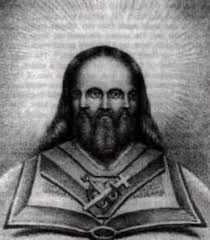
- Our own and other people’s promoting , believing in, being followers of Trimurti, the Hindu Trinity, which is the representation of the three aspects of God in the forms of Brahma, among others Vishnu and Shiva, and worshipping them, promoting them, deifying them, adoring them as the Trinity, as well as each of them individually and not only these, and our own and other people’s experiencing of all the consequences of this
- Our own and other people’s believing, being convinced that each of the figures of the Hindu Trinity has a specific role to fulfil in the cycle of the life of the universe, and that Brahma creates the universe, among others Vishnu sustains it, and Shiva destroys it and not only these, and our own and other people’s experiencing of all the consequences of this
- Our own and other people’s promoting , imagining, creating, depicting for ourselves and others, creating images, paintings, sculptures and likenesses of Trimurti, the Hindu Trinity, as a human figure with three heads, including because of being convinced that the three aspects of the deity are different manifestations of the one God, and combining this in our minds together with the Holy Trinity in Christianity and not only these, and our own and other people’s experiencing of all the consequences of this
- Our own and other people’s promoting , being followers of, worshipping, adoring and deifying, among others Vishnu, one of the Trimurti, the Hindu Trinity, as the only God in, among others, Vaishnavism, symbolising the sustaining aspect of God, and identifying him with his avatars, including most often with Krishna and Rama and not only these, and our own and other people’s experiencing of all the consequences of this
- Our own and other people’s being convinced, believing that, among others, Vishnu, Trimurti and the Holy Trinity are the all-encompassing deity containing everything, and referring to him together with others as Purusha or Mahapurusha, Paramatma, that is, the Supreme Soul, as well as believing that, among others, Vishnu is the one who contains within himself all souls, and therefore also our own soul and other souls and not only these, and our own and other people’s experiencing of all the consequences of this
- Our own and other people’s promoting , believing in various accounts, traditions, legends, stories, myths and narratives concerning various gods, deities, goddesses and not only them, including those concerning the birth of Krishna and Kalkin, who is one of the avatars of, among others, Vishnu and not only these, and our own and other people’s experiencing of all the consequences of this
- Our own and other people’s promoting , being convinced and believing that, among others, Vishnu, Trimurti and the Holy Trinity are the one whose art differs from the holy scriptures, that he is twofold in his nature, possessing both form and formlessness, twofold also in wisdom, exoteric and esoteric, the ultimate end of both, and not only these, and our own and other people’s experiencing of all the consequences of this
- Our own and other people’s promoting , being convinced and believing that, among others, Vishnu, Trimurti and the Holy Trinity are the smallest of the small and the greatest of the great, the all-knowing and all-pervading spirit of art and speech: imperceptible, indescribable, incomprehensible, pure, infinite and eternal, nameless, and not only these, and our own and other people’s experiencing of all the consequences of this
- Our own and other people’s promoting , being convinced and believing that, among others, Vishnu, Trimurti and the Holy Trinity are the one who hears without ears, sees without eyes, moves without feet, grasps without hands, knows everything and the art unknown to anyone; the common centre of all things, in whom everything exists, and not only these, and our own and other people’s experiencing of all the consequences of this
- Our own and other people’s being convinced and believing that, among others, Vishnu, Trimurti and the Holy Trinity are like fire which, though one, transforms itself in many ways, and that his art governs all phenomena, and also rules over the eternal state born of wisdom and the eye of knowledge, and not only these, and our own and other people’s experiencing of all the consequences of this
- Our own and other people’s promoting , being convinced and believing that apart from, among others, Vishnu, Trimurti and the Holy Trinity and their power there is nothing, and that his art, unstained by fear, anger, desire, fatigue or reluctance, both individual and universal, is independent and without beginning, and not only these, and our own and other people’s experiencing of all the consequences of this
- Our own and other people’s promoting , being convinced and believing that, among others, Vishnu, Trimurti and the Holy Trinity are subject to no one and to no necessity, and assume forms either without any cause or for some cause, and not only these, and our own and other people’s experiencing of all the consequences of this
- Our own and other people’s worshipping, glorifying, praising and adoring, among others, Vishnu, Trimurti and the Holy Trinity, who according to us and others pervade the entire universe, have a thousand forms, a thousand arms, many faces, many feet, many likenesses, images and sculptures, and whose art includes nature, reason, consciousness and even their spiritual source, and not only these, and our own and other people’s experiencing of all the consequences of this
- Our own and other people’s being convinced and believing that all gods are ready to fulfil the will of, among others, Vishnu, Trimurti and the Holy Trinity, and that they are waiting only for their—his command, and not only these, and our own and other people’s experiencing of all the consequences of this
- Our own and other people’s promoting , being convinced and believing that, among others, Vishnu, Trimurti and the Holy Trinity possess, among others, six perfections, including all knowledge, wealth, strength, fame, beauty, renunciation, and not only these, and our own and other people’s experiencing of all the consequences of this
- Our own and other people’s promoting , believing and being convinced that, among others, Vishnu, Trimurti and the Holy Trinity incarnate as, among others, Maha-Vishnu, Trimurti and the Holy Trinity, that is, as the creator of the material universes, then as the Garbhodakashayi avatar, present in each universe, and then as the Kshirodakashayi avatar, or Paramatma, the Supersoul, present in every heart and every part of creation, and not only these, and our own and other people’s experiencing of all the consequences of this
- Our own and other people’s promoting , being convinced and believing that the energies of Krishna, an incarnation of, among others, Vishnu, may be divided into three, namely the energies of thinking, feeling and acting, and that when he manifests his energy of thinking, He is the Supreme Lord, when he manifests his energy of feeling, he is Lord Vasudeva, and when he manifests the energy of acting, he is Sankarshana Balarama, and that without his thinking, feeling and acting creation could not come into existence, and not only these, and our own and other people’s experiencing of all the consequences of this
- Our own and other people’s promoting , being convinced that in the spiritual world there is no/is creation, because the planets there have no beginning, yet creation exists in the material world, and that in both cases the spiritual and material worlds are manifestations of the energy of action in which, among others, Krishna, Radha, Trimurti and the Holy Trinity act in the form of Sankarshana and Balarama, and not only these, and our own and other people’s experiencing of all the consequences of this
- Our own and other people’s depicting, viewing and perceiving, among others, the avatars Krishna, Vishnu and the Holy Trinity as, among others, a four-armed, three-headed handsome man with blue skin, wearing a golden robe, with the shrivatsa mark and the Kaustubha jewel upon his chest, whose attributes are a conch, discus, mace and lotus, or also depicting and viewing him, among others, in art upon the coils of the abyssal serpent Ananta, where, among others, Vishnu, Trimurti and the Holy Trinity travel with closed eyes across the cosmic ocean of milk in the company of the five Pandava brothers and their wife Draupadi, as well as as a youth wearing a shining diadem, and not only these, and our own and other people’s experiencing of all the consequences of this
- Our own and other people’s promoting , being convinced and believing that the abode of, among others, Vishnu and Krishna is the planet Vaikuntha, that his wife is Lakshmi, the goddess of wealth and happiness, and that his favourite mount, vahana, is Garuda, a giant mythical eagle with a human torso
- Our own and other people’s making for ourselves and others, and having made for ourselves and others, objects of worship out of three gods, including Brahma, Vishnu and Shiva, who, among others, in scholarly Hindu theology are joined into a triad—Trimurti—and not only these, and our own and other people’s experiencing of all the consequences of this
- Our own and other people’s being convinced and believing that, among others, Brahma is the creator of the world periods, kalpas, that among others Vishnu, Trimurti and the Holy Trinity are the preservers of this world, while Shiva brings about its destruction at the end of each kalpa, and not only these, and our own and other people’s experiencing of all the consequences of this
- Our own and other people’s imagining, depicting and viewing, among others, Brahma as a bearded elderly man, a grandfather seated upon a lotus, having, among others, four crowned heads and four hands in which he holds the book of the Vedas, a vessel of water and a sacrificial spoon, and not only these, and our own and other people’s experiencing of all the consequences of this
- Our own and other people’s promoting , believing and being convinced that, among others, Brahma possessed the power of creation, which over time he lost to the remaining gods, becoming a demiurge carrying out the commands of the supreme god, and not only these, and our own and other people’s experiencing of all the consequences of this
- Our own and other people’s promoting , believing in various myths, legends and traditions according to which, when, among others, Vishnu rested upon the cosmic serpent Ananta in the primordial ocean, a lotus grew from his navel, and within it sat, among others, Brahma immersed in meditation and prepared to create the world, and not only these, and our own and other people’s experiencing of all the consequences of this
- Our own and other people’s promoting, being convinced and believing that, among others, Brahma emanates the material elements of the universe and the concepts through which humanity may understand them, and not only these, and our own and other people’s experiencing of all the consequences of this
- Our own and other people’s promoting, being convinced and believing that, among others, Vishnu, Trimurti and the Holy Trinity, facing in all directions and being active, are a good god and friendly toward people, Souls, beings, entities, creations and not only them, and our own and other people’s experiencing of all the consequences of this
- Our own and other people’s awaiting the final descent of, among others, Vishnu, Trimurti and the Holy Trinity, which is to free the world from villains and not only them, and our own and other people’s experiencing of all the consequences of this
- Our own and other people’s being followers and worshippers of Shiva, Vishnu, Trimurti and the Holy Trinity, a god with, among others, 1,008 names, benevolent and gracious, who is a complex and internally contradictory figure because he combines asceticism with the fertility cult, and not only these, and our own and other people’s experiencing of all the consequences of this
- Our own and other people’s promoting, creating, possessing and viewing various images of Shiva, Vishnu, Trimurti and the Holy Trinity in which he is depicted, among others, with more than one head, including even five heads, with his hair tied in a topknot upon his head, including a topknot of dreadlocks, with a crescent moon placed in his hair, possessing three eyes, including the central one, called the eye of knowledge, which is closed, and not only these, and our own and other people’s experiencing of all the consequences of this
- Our own and other people’s being convinced and believing that the animals associated with Shiva, Vishnu, Trimurti and the Holy Trinity are naga serpents, which in images are coiled around his neck, hair and arms and serve as ornaments, symbolically referring, as negative aspects, to hypocrisy, and that Shiva’s weapon is, among others, the trident, and not only these, and our own and other people’s experiencing of all the consequences of this
- Our own and other people’s being convinced and believing that Shiva, Vishnu, Trimurti and the Holy Trinity are the guardians of meditation and yogis, of all visible and invisible saints, as well as entrusting ourselves and others into his—their care, and not only these, and our own and other people’s experiencing of all the consequences of this
- Our own and other people’s worshipping, deifying and adoring Shiva, Vishnu and Buddha as gods of reproductive power symbolised by the phallus, linga, as well as worshipping Shiva, Vishnu and Buddha symbolised by the lingam, and considering that lingam to be a symbol of the infinity of God, and not only these, and our own and other people’s experiencing of all the consequences of this
- Our own and other people’s being convinced and believing that Shiva’s consort or power, shakti, is Devi, a goddess worshipped in various forms, including as Uma, Light, Parvati, Daughter of the Mountain, Durga, the Inaccessible One, or Kali, the Black One, and not only these, and our own and other people’s experiencing of all the consequences of this
- Our own and other people’s believing that Shiva’s mount is a white bull and the serpent Shesha, which expresses fertility and strength, and not only these, and our own and other people’s experiencing of all the consequences of this
- Our own and other people’s being followers of various, among others, Hindu and our own denominations and beliefs, and believing that a virtuous person after earthly life may enter one of, among others, five paradises, each ruled by a different god, for example Trimurti or the Holy Trinity, as well as that there exists a hell divided into many sectors, in each of which different tortures and perversions are applied according to the type of transgressions for which one must atone, and not only these, and our own and other people’s experiencing of all the consequences of this
- Our own and other people’s conducting the worship of deities and gods, among others in Hinduism and among ourselves, among others as priests, monks, Brahmins and ordinary followers, usually alone or within the family circle, and not only these, and our own and other people’s experiencing of all the consequences of this
- Our own and other people’s possessing, among others, various shrines and altars in our homes with images or symbols of God, for example a Cross, a stone pillar representing Shiva, Vishnu or Trimurti, as well as images from Hindu mythology and our own images, and not only these, and our own and other people’s experiencing of all the consequences of this
- Our own and other people’s being followers of various gods who, in temples and household shrines, awaken their gods at dawn, carry them out of the bedroom where the gods slept with their wives, then wash them, dry them, adorn them, paint them, bring them offerings, believing that they consume the non-material part of the sacrificial food, and not only these, and our own and other people’s experiencing of all the consequences of this
- Our own and other people’s adoring and worshipping various deities and gods, including, among others, Trimurti and the Holy Trinity, among others by extending our hands toward them and then placing them upon our foreheads, as well as by singing hymns, burning incense and lamps, reciting sacred texts, offering flowers and sacrifices, and not only these, and also, in domestic worship, among others anointing deities and likenesses while reciting appropriate texts, performing other acts of worship, and then meditating before the altar and at home, and not only these, and our own and other people’s experiencing of all the consequences of this
- Our own and other people’s being Hindus and celebrating, as they do and like them, various festivals during which, among others, various songs are sung, various symbols, including symbols of deities and phallic symbols, are carried in processions, people sprinkle one another with ashes, pour coloured water over one another, light oil lamps, and not only these, and our own and other people’s experiencing of all the consequences of this
Technical matters concerning the idea and the construction of sentences when working with intentions.
Article “800 Intentions for Cleansing” Link
“Constructing Extensive Intentions and Prayers. A Skype Conversation About the Technique” Link
“One-Sentence Pattern for Working with Intentions.” Link
The word (–not), added to a word when working with intentions, means that it is worthwhile to mention it together with its opposite, or even, during the work itself, independently find and speak any synonyms that come to mind together with their opposites.
For example—being poor, sick; it is good to say it also together with its opposite
–being poor, sick, –not being poor, sick
This makes it possible immediately to address a given pattern as broadly as possible in different aspects, including in its opposite. It is also worth knowing that Souls often think and claim that they do not have such opposite patterns, for example that they are not idolaters, as in the given case and the given word.
Another example:
The Soul of a woman denies ever having been a bad mother. Therefore, adding the negation—not being a bad mother—may allow her to understand the state in which she finds herself.
Being a bad mother, –not being a bad mother–
“Absolutely not, never in my life! These are not my patterns. What I am doing is my private matter.” [The Soul very often says or thinks this about herself.]
Opublikowano: 30/08/2026
Autor: Sławomir Majda
Kateogrie: Religions, priests, sects, idolatry, vows.
Komentarze