

Populous Cities and Anthills, Beehives
I had not been in a certain large city for many years, and around the year 2000 I went there with an acquaintance. I walked around the city centre for some time and I was overwhelmed by a feeling of great harm suffered by the people standing at a bus stop. I understood the mechanism of that harm immediately, because information came that these were poor people who, not having cars, travelled in crowded public transport. My acquaintance, who sees energetics and human Souls, added that in such a large city there are usually no places where someone has not suffered, died, been injured, robbed, etc. Such saturation of an area with suffering must somehow affect its inhabitants.
I feel bad in large cities and I was curious about the pattern of this mechanism, especially since even a numerologist once pointed this out to me as a consequence of the Soul’s karma. He suggested that living in small towns was favourable for me.
The mystery was explained after working through a package of intentions concerning animals and animal karma. There is, after all, an obvious analogy between enclosed insect environments such as a beehive, anthill or termite mound and large cities, agglomerations numbering hundreds of thousands of human inhabitants. And even with Polis, that is, city-states, of which there used to be many.
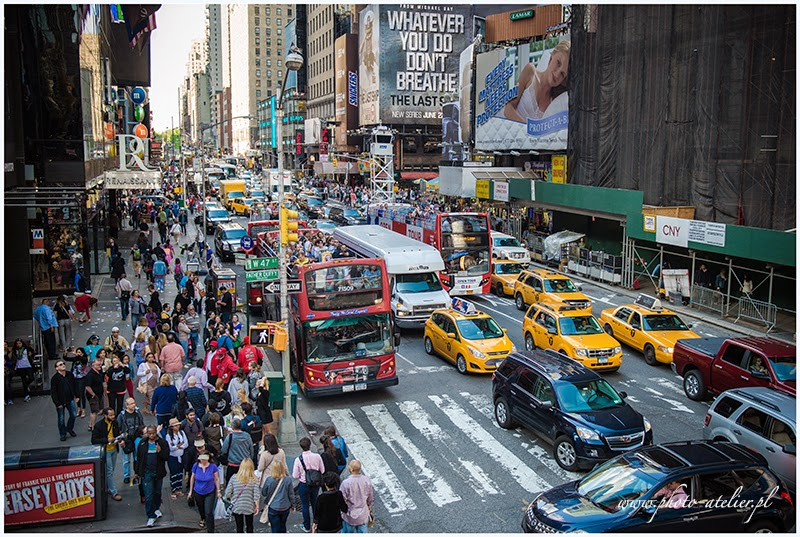
Let us look at what streets, subway stations, road crossings, bridges and stops look like, for example, in Asian or American cities during peak traffic, and compare them with the routes followed, for example, by ants in a large anthill. A large anthill or termite mound sometimes has several million inhabitants.
Mexico City has around 35 million inhabitants. Cairo has the same number, of whom around 3 million live in an enormous cemetery.
In the people of large cities and in insects we see the same drive pushing personalities forward. The engine of this movement along the routes of the city/beehive/anthill is mainly work and food. Sex in the street is some kind of excess. Insects, unlike people, have given up sex in favour of their own parents. Social insects such as ants and bees do not copulate apart from the queen and the king, who dies after sex.
Life in beehives/populous cities/termite mounds is completely devoid of privacy. The space available to an individual living/sleeping there is small. Some individuals walk over the heads of other inhabitants. Let us take the chemistry of organisms, body odour, etc. Among insects, everyone mainly smells the scents of neighbours and their own. The only olfactory relaxation comes from leaving the home to do hard, often deadly labour. Here too there is an analogy with human settlements. In the age of industrialisation, we know the smells of production halls, the smells of supermarkets, the chemistry of municipal sewage systems.
In their strongholds, insects have streets and squares where they crowd together and move around in the same way as people. Insect streets are sometimes one-way, and the strongholds have one or several gates carefully guarded by armed sentries.
E. Cayce stated in his readings that there are certain incarnational “routes” for human Souls. For example, an incarnation in Egypt, later among the Incas, in the France of Louis XIV, and finally in the USA at the beginning of the 20th century.
If we do not insist that human Souls absolutely cannot take an excursion into animal incarnations, then we can easily accept that usually after, for example, bee incarnations of Souls, their subsequent earthly personalities are born as people in Asia, as its slant-eyed inhabitants. An example—an analogy known to us from contemporary times—is certain hotels for Japanese people. For a European, it is an idea straight out of a horror story, but there it is explained by lack of space—exactly as in a beehive/anthill. Namely, a person wishing to stay overnight gets a place in a separate room? Compartment? Or rather in something resembling a larger coffin. They can only sleep or lie there. In the West, such restriction of one’s own or someone else’s freedom and space is not possible outside prison facilities, penal labour camps or what the Third Reich created.
Opublikowano: 18/09/2026
Autor: Sławomir Majda
Kateogrie: Animals
Komentarze