

Heraldry of Nobility and Magnates, and Knighthood in Peacock Feathers. Spiritual Burdens and Blockages.
A heraldic armorial is a work describing coats of arms together with their illustrations and the families entitled to bear them.
The earliest armorials were rolls of arms prepared from the 13th century onward for knightly tournaments, serving as aids in identifying participants and verifying the correctness of the coats of arms they used. Another form of armorial, especially in Western Europe, consisted of official registers compiled during estate inspections for taxation purposes, decorated from the 15th century onward with depictions of coats of arms. Later came armorials prepared during special inspections conducted by heralds to verify the legality and correctness of heraldic use. One of the oldest European armorials is the Gelre Armorial, created around 1369 and expanded until the 15th century, containing Polish coats of arms as well. The term “armorial” is also used for genealogical compilations organized by surnames, containing information about heraldic affiliation. More on this subject is described here Link
As soon as I learned in early childhood, already being literate, about the idea and all the values of possessing, and especially lacking, a family coat of arms, a long-lasting resentment arose in me connected with my social origin, far removed from magnate or even noble ancestry. Various heraldic implements and heraldry in general were somewhat familiar to me. Yet I did not see much point in studying them in detail, especially because of the impossibility of socially advancing into those castes. First, the threshold was too high, and second, the then First Secretary of the Polish United Workers’ Party, Władysław Gomułka, had no intention of knighting anyone, let alone distributing noble coats of arms and suitable privileges.
The whole matter faded entirely from memory until I encountered a scholarly explanation of the meaning of a coat of arms dominated by peacock feathers, according to which, among other things:
[„In the crest above the golden noble crown is a bundle of three ostrich feathers.” The ostrich feather symbolized truth, justice, and order. It was also believed to serve its bearer at the moment of death, when his sins would be placed on one side of the scales and the ostrich feather on the other. The feather was an emblem of truth and justice. Three ostrich feathers signified “Lord,” “Free Lord” – a rank higher than ordinary nobility or untitled landed nobility, but lower than magnates and aristocrats (five to seven feathers). In Western European monarchies an equivalent title was Baron.]
How do these heraldic feathers compare with Lions, Griffins, Wolves, various saints, or other heraldic symbols visible on family insignia?
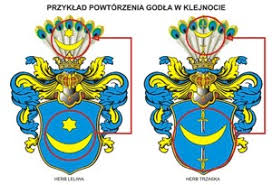
Lions might symbolize valor. On the other hand, lions are commonly known as idle creatures for whom lionesses hunt food. Let us now objectively observe, with the eyes of a rational person of the 21st century, people who today proudly wear, among other things, ostrich feathers. If some man, even a Prince himself, publicly appeared with such decorations, perhaps he would only fit into clubs of gay men or transvestites, whereas 500 years ago every wearer would have proudly displayed them, even on capital city streets. Thus, the phenomenon strongly corresponds with the article “Prostitute or Soldier?” Link
Either a man is a brawler, brute, or killer and dresses accordingly, likewise his Soul in the astral realm, for example as a Shinigami Link or he wears ostrich feathers, tights, knightly lances, helmets, swords, earrings – all to be seen by others. rajtuzy Link
How different the world might look if every conflict and problem were immediately entrusted to the Creator for dissolution. The matter of feathers is, one might say… rather slippery.
Things begin to go wrong when someone acts and schemes in order to deceive others, especially God. Then one sees only personal plans while something entirely different unfolds. Looking from outside, one no longer knows when a pattern or deception becomes absurd enough to laugh at.
Of course, first and foremost, they are merely birds.
Let us ask ourselves: who today publicly wears peacock and ostrich feathers?
Secondly, so-called cheerful girls from dance revues (Link)
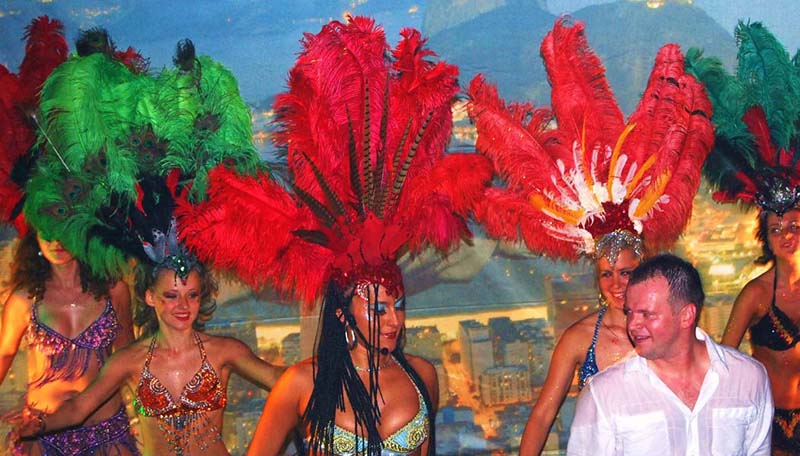
and brothels.
Let us return in memory to medieval and Renaissance battles and ask another question: who stood in those soldierly and knightly struggles?
Usually two hostile armies.
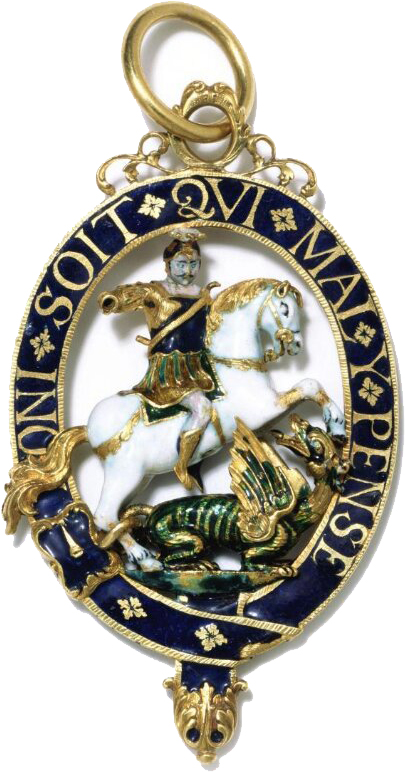
On one side stood noblemen adorned with peacock feathers, facing guardsmen and nobility decorated, among other distinctions, with the “Order of the Garter” Link
, whose motto is:
“Shame on him who thinks evil of it.”
Questions concerning the sexuality of particular noblemen then become provocative and pressing. Who were men spending months among themselves without wives or families? How did they manage their own sexuality and that of their companions?
These gender-mixed outfits, viewed in this context, become less surprising.
Because what difference did it make that a knight or soldier wore armor if he also wore garments, peacock feathers, garters, while his Soul wore symbolic attire no less elaborate?
Possibly not without reason a military chronicler lamented noblemen dressed in heraldic peacock feathers and garter regalia in his diary:
“And ours, not like knightly men, but like women, or rather harlots, none dared leave camp to fight them.”
Soldiers’ memoirs and knightly journals contain blood-curdling descriptions of slaughter and battle. We are unsurprised by quarrels and displays of superiority by dukes and seven-feather barons over lesser landed nobility possessing only three feathers.
Even today, when some men wish to prove something but cannot live in love toward themselves and others, they gather similar people into armies to spread destruction, confusion, suffering, and fear.
Meanwhile, if people were consistent – considering their attire – and without a will to reconcile through the Creator, they could resolve conflicts openly without concealment.
Imagine two leaders gathering armies.
Those armies then suffer painful consequences.
Whereas it might suffice to place a tub filled with jelly where rebellious leaders settle disputes exactly as in a photograph.
During it they might reach understanding with others based partly on personal charm.
Reader, do you notice anger in people wrestling in jelly? Murderous inclinations?
After leaders resolved disputes, armies could return home and beat swords into plowshares.

Husbands might return to painted dolls waiting at home, making lacework and needlecraft.
This entry has one comment:
s_majda writes:
14/06/2016 at 21:21 (Edit)
“It came back to me during a regression session that hemorrhoids arrived after receiving hussar wings and becoming skilled in mounted warfare. From a received letter.”
Opublikowano: 21/05/2026
Autor: Sławomir Majda
Kateogrie: The Prostitute and the Soldier [PTSD, Combat Shock]
Komentarze